
There’s been some mixed messages about olive oil floating around. Someone may have told you not to cook with it. Maybe you’ve been buying the darkest bottles on the shelf, believing they were the best.
Let these common olive oil myths stop fooling you into skipping out on one of the most beneficial foods in the Mediterranean diet. The truth is that once you know the facts, you can feel confident using olive oil in your daily cooking.
Myth 1: You Shouldn’t Cook With Olive Oil
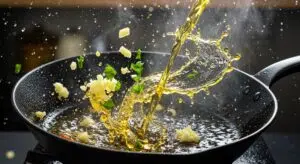
This might be the most common olive oil myth out there, and it’s just not true. Smoke point isn’t the ideal way to determine an oil’s stability, anyway. Research shows that extra virgin olive oil is actually the most stable cooking oil, even when heated to high temperatures.
Extra virgin olive oil has a smoke point range of 350°F to 410°F. Many sautéing or pan-frying methods operate in the 300–400°F range, but temperatures vary a lot by technique and cookware. You can sauté, bake, or stir-fry with extra virgin olive oil without any problems. Extra virgin olive oil is composed mainly of stable, monounsaturated fats. It also contains antioxidants, such as polyphenols, which help prevent oxidation during heating.
A 2018 study found that extra virgin olive oil was the most stable among 10 other cooking oils. Extra virgin olive oil produced the lowest levels of harmful compounds, even compared to oils with higher smoke points such as canola oil, coconut oil, and grapeseed oil.
Next time you grab a different oil because you think your olive oil can’t handle the heat, think twice.
Myth 2: Darker Olive Oil Means Higher Quality
You’re standing in the supermarket staring at bottles of olive oil, and you instinctively reach for the bottle with the darkest green hue. Doesn’t dark green equal better quality? Not really. This belief is just another olive oil myth that needs to be dispelled.
Color is not an indicator of quality. Olive oil’s color is affected by factors unrelated to its taste. These factors include variety, region, climate, fruit maturity, and more. It also depends on how the olives were processed. That beautiful bottle of deep emerald oil could be low-quality oil, just like that shade of pale gold bottle next to it.
Try looking for the harvest date instead. This date indicates how fresh the oil is. Look for freshness and proper processing first and foremost. Don’t worry too much about color.
Myth 3: Acidity Tells You Everything About Quality
You’ve probably glanced at an olive oil label and seen a percentage for acidity and thought lower numbers meant better olive oil. While acidity is an essential factor, the idea that olive oil can be reduced to a single number is one of the most common myths about it.
Acidity actually refers to the free fatty acid content, which is unrelated to how tart the oil will taste. You can’t even tell free acidity by taste, color, or odor. While extra virgin olive oil needs to have less than 0.8% acidity, that isn’t the only factor you should be considering.
Take a look at what else matters: polyphenol content, peroxide value, date of harvest, and sensory attributes all matter.
Refined olive oils will often have extremely low acidity, but they are lower quality than their extra virgin counterparts. Don’t let one number trick you into buying something you won’t love.
Myth 4: All Olive Oils Taste the Same
Believing that all olive oil tastes the same, no matter what brand or bottle you purchase, is one of those olive oil myths that keeps consumers from experiencing truly great oils.
Olive oils can range from mild and buttery to peppery and robust based on the variety of olive used, harvest time, region, and more. Extra virgin olive oil is made by mechanically pressing olives without chemical solvents or extreme heat that would alter the oil. This creates a higher-quality product with more complex flavors than olive oil.
Look for fruity aromas and flavors when you taste high-quality extra virgin olive oil. There should be a good balance to the flavor. A peppery finish is not a defect; it actually indicates a higher level of polyphenols and freshness.
Myth 5: Olive Oil Lasts Forever
Unlike fine wine, olive oil doesn’t get better with age. In fact, it’s quite the opposite: Extra virgin olive oil is better the fresher it is. That’s just one of the olive oil myths that could have you cooking with rancid oil and not even knowing it.
If unopened and stored correctly, an expensive extra virgin olive oil will retain its flavor for 12 to 18 months from the date of harvest. After you open it up, you have about 3-6 months before oxidation sets in. Heat, air, and light can speed up oxidation and cause your olive oil to go rancid sooner.
Expired olive oil usually has a slightly rancid smell. Some people have even compared it to a crayon. If your oil smells funky or tastes stale, throw it out and buy a fresh bottle.
What Really Matters When Choosing the Right Olive Oil
Armed with the knowledge of these olive oil myths, you’ll be able to confidently buy better olive oil and cook with it, knowing that you’re getting its full potential. Look for bottles that list the exact date it was harvested, choose glass that is dark or tin that won’t let light pass, and store it away from your stove in a cool, dark place. Be sure to use your opened extra virgin olive oil within a few months for optimal flavor and health benefits.
Once you discard these myths, you can enjoy one of the healthiest ingredients in your kitchen.











0 Comments