
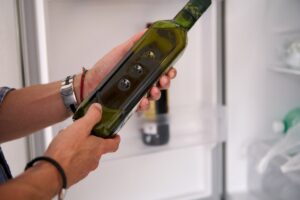
Most home cooks find an old, unopened olive oil bottle in the pantry, lost in the back, and wonder whether it is okay to use. Being a natural fruit juice, unrefined (as opposed to a processed chemical fat), olive oil will go rancid over time, even if the bottle has remained completely sealed on the inside.
The number one question people ask is “how long will unopened olive oil stay for?” Well, in general, 18-24 months from the date of harvest or bottling.
Common Shelf Life
Commercial bottles of olive oil typically have a shelf life of 18 to 24 months when unopened. Consumers should look at when the olives were harvested or when the bottle was actually filled, rather than just the best-by date on the bottle. The clock begins when that particular olive oil is crushed.
Different oils will vary in quality. Extra virgin olive oil generally lasts longer because it is high in natural polyphenols and antioxidants that act as preservatives. Keep in mind that there is a difference between something safe to consume and something that is of good quality.
Olive oil doesn’t actually go bad like some foods do, which could make you sick. When experts refer to the shelf life of olive oil, they mean that after a certain period of time, it loses its zesty flavor, aroma, and some nutritional value.
How Does the Olive Oil Last if It’s Unopened?
Knowing how oxidation works helps explain why an unopened bottle lasts so long. Without any air in the bottle, there is no oxygen exposure. Oxygen is the catalyst for oxidation, and that’s how fats found in foods become rancid. While tightly capped, the vitamin E naturally present in oils and polyphenols helps prevent oxidative damage.
But really, the life of an unopened bottle is dependent on its packaging. Responsible producers usually package their oils in dark glass, tin containers, or opaque bottles. Dark glass and tins prevent exposure to UV light, which can quickly destroy your oil, even if it is tightly sealed.
Even though the environment in which the oil is stored won’t affect it much, consumers should always keep in mind that oils will go through a natural decline. Those wondering how long does olive oil last should understand that the distinct flavor, particularly the peppery finish and grassy taste, begins to dull after 12 months.
How Long Is Olive Oil Good for After Opening?
After the seal is broken, the best freshness period decreases significantly to an average of 3 to 6 months. How long is olive oil good for after opening is a question consumers often search for, and the three- to six-month period is the most consistent indicator.
Breaking the seal lets in a fresh supply of oxygen into the bottle, reinitiating the oxidation clock. It immediately depletes the oil’s natural antioxidants. The bottle shows an evident flavor change over the months. The rich, fruitful, and spicy flavors dissipate slowly, leaving a bland and ultimately one-dimensional palate.
Home cooks should buy the right-sized bottles to ensure optimal freshness, based on their daily or weekly cooking patterns. When a household consumes a small tablespoon of the same in a week, a big bulk jug is bound to be wasted before it’s emptied.
How to Tell if Your Olive Oil Has Gone Bad
To detect spoiled oil, the senses have to be involved, and a basic sniff test is sufficient. The most convenient way to identify rancidity is by the smell of the liquid itself, as rancid oil emits warning odors of aged crayons, putty, old nuts, or old wax. It will be totally without the fresh, grassy, or even fruity smell of a high-quality product.
When the smell is satisfactory, but one isn’t sure, one can do a small taste test. When the liquid has an abnormally greasy, flat, metallic, or abnormally bitter taste, without the characteristic peppery catch in the throat, oxidation has occurred.
Visual information is also useful. Although cloudiness may indicate that the liquid has cooled, extreme color changes and an unpleasant smell indicate spoilage. When the oil becomes abnormally pale or yellow-brown, with a sour smell, it’s spoiled. Rancid oil doesn’t taste good and shouldn’t be consumed, but it can be used for other household chores, such as leather conditioning.
5 Tips to Make It Last More
The proper storage methods greatly prolong the lifespan of this precious kitchen ingredient.
- Preservation is a matter of location
To extend the life span, it is better to store the bottle in a dark, cool place, such as a closed pantry or a low cupboard. Home cooks shouldn’t store the bottle next to the stove, oven, or dishwasher, as ambient heat increases the rate of degradation.
- Turn off the light
Glass bottles cannot protect the contents from harmful ultraviolet rays. When buying oil in transparent bottles, one should either wrap the container in foil or pour the liquid into a transparent dispenser right away.
- Tightly close the bottle
When a pour spout isn’t covered, it can cause oil to spoil due to a continuous supply of air. Users should never fail to screw the cap on properly after each use to avoid exposure to unnecessary oxygen.
- Avoid the refrigerator
The liquid doesn’t necessarily need to be refrigerated, and the fat will solidify and become opaque. The results are most effective when the bottle is stored at room temperature (between 57 and 70°F).
- Buy the right size
Buying smaller bottles will ensure the product is consumed within the optimal 3 to 6 months. The practice ensures that every meal is as nutritious as possible and as tasty as possible, directly addressing the usual question of how long is olive oil good for after opening.










0 Comments